

Robot Lidar Service Notes: Shot Limiting and Shutdown
2026-11-05
Robot Lidar Service Notes: Shot Limiting and Shutdown
A robot service packet may contain lidar status fields about heat without saying whether the sensor was limiting its laser output or approaching shutdown. Those descriptions should remain separate. The inspected Ouster operations reference describes Shot Limiting and an independent thermal-shutdown state machine, while the data reference assigns them different status and countdown fields. Reading those definitions helps a service editor preserve what an existing record actually says before anyone attempts a physical diagnosis.
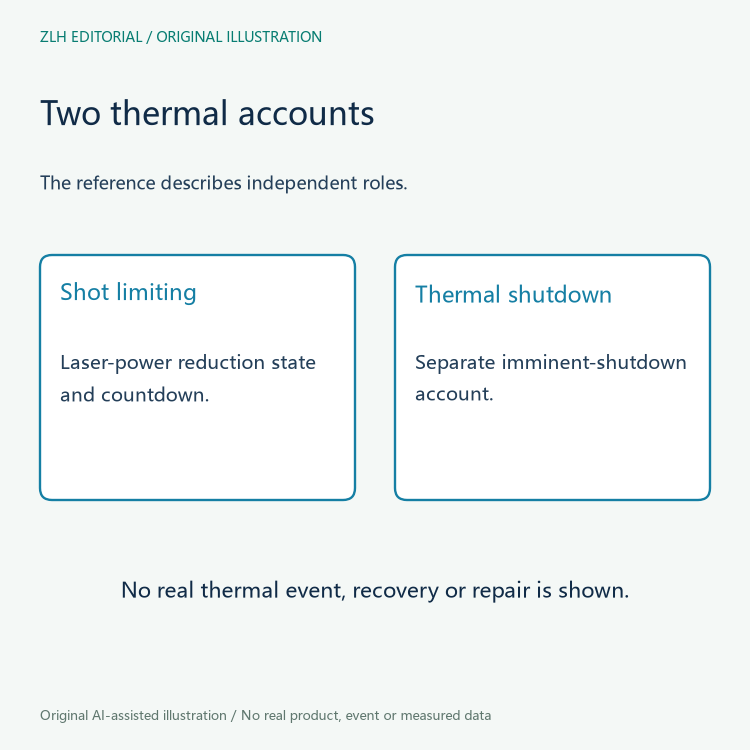
Shot limiting describes a documented operating response
The Ouster reference distinguishes normal operation, imminent shot limiting and shot limiting. Its explanation connects shot limiting with reducing laser power under elevated temperature conditions. It also notes that range and precision can be affected. The important documentation point is that a limiting state is a defined response, rather than another spelling of completed shutdown.
A supplied status record should therefore retain the original field and the contributor's sensor and firmware context. A generic paragraph about heat cannot identify the state of a particular sensor at a particular moment. This article reads manufacturer descriptions and an explicitly fictional record example. It does not interrogate a sensor, observe a real thermal event or propose cooling, resetting or continued operation.
The shutdown account has an independent state machine
The operations page explicitly describes thermal shutdown as a separate state machine. It distinguishes an imminent shutdown condition from shutdown after the relevant elevated-temperature condition persists. That distinction prevents an editor from converting every countdown mention into an assertion that output had already stopped. It also prevents a shot-limiting label from being treated as a complete account of the shutdown state.
The page directs readers to hardware-specific thermal performance information. A service summary should retain that dependency rather than importing a universal temperature limit. No threshold or recovery procedure is supplied here. The role of the article is narrower: identify which described state belongs to which documented mechanism and leave the actual equipment assessment to its supporting evidence.
Packet fields preserve two status roles and two countdown roles
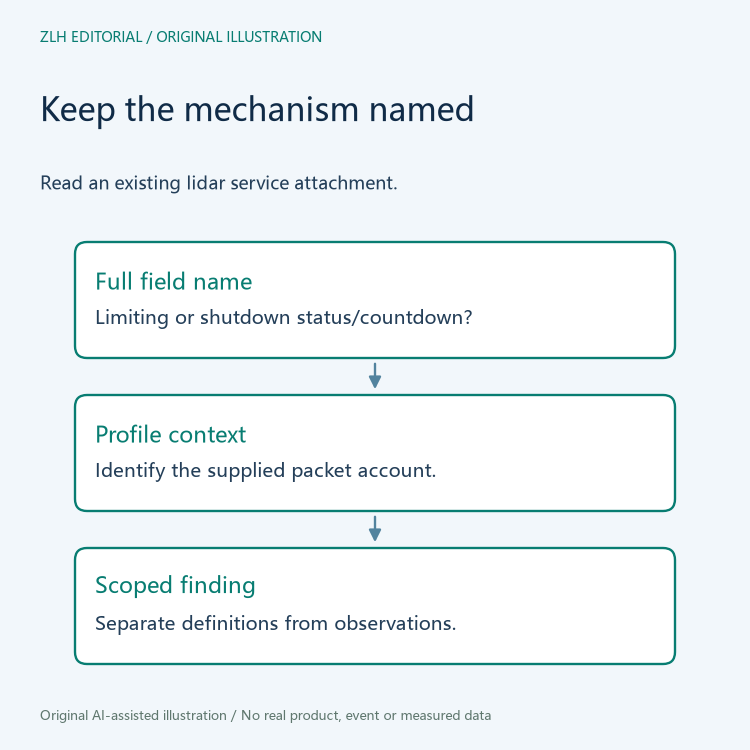
The configurable packet description separately lists shot-limiting status, shutdown status, shot-limiting countdown and shutdown countdown. Those headings are useful because a table stripped to status and time remaining could hide which mechanism was being reported. The record should preserve the full field names, the applicable packet profile and the reference used to explain their values.
The operations reference also limits where those fields appear by naming relevant configurable data profiles. Consequently, the existence of fields in a public manual is not proof that a cropped attachment used a profile containing them. A missing column may be an excerpt boundary or a different report structure. The author should identify the supplied material before drawing a conclusion from what is absent.
The manual discusses alerts alongside the state explanations. An alert excerpt and a packet status field should retain their own source labels when both appear in a service folder. Their documented connection can help a reviewer locate the relevant section, but it does not supply observation times that the folder omitted. Preserving the original label also lets a later service contributor explain whether two attachments refer to the same reported interval.
Use a fictional service note to avoid inventing a sequence
Suppose a fictional maintenance appendix contains a shot-limiting status label and a line headed shutdown countdown, but the excerpt does not identify their observation times or relationship. An editor should not automatically describe a complete sequence from first limiting to final shutdown. The two lines need their own source context. This invented example contains no sensor readings, temperatures, actual countdown values or reported machine behavior.
A revised note can state which fields the excerpt supplies and what additional record would clarify their relationship. If a contributor later supplies an actual sequence, that account should retain its attribution and observation boundaries. The definition of an imminent state remains a definition; it does not substitute for evidence that a later transition occurred. Neither can it establish why a particular robot application behaved unexpectedly.
Close the document question without closing the repair case
A bounded service conclusion might say that the status headings have been separated and their profile context identified. It can list any missing timing, sensor identity or firmware information. It should not announce that a thermal issue was corrected, that the lidar retained its nominal performance, or that a complete robot is ready for use. Those are different questions requiring actual equipment evidence.
Related reading is available in the site's robot service documentation and sensor reference notes. Keeping Shot Limiting beside its own status and countdown, while retaining the independent shutdown account, makes an existing diagnostic attachment easier to discuss. A clearer attachment is useful preparation for a service handover, with the physical cause and repair outcome still separately documented.
Primary references: Ouster operations reference, shot limiting and thermal shutdown; Ouster configurable lidar packet fields.


