

Robot Repair Intake: Preserve the Complete Error Code
2026-11-04
Robot Repair Intake: Preserve the Complete Error Code
Robot Repair Intake becomes less useful when a detailed error identifier is shortened to a broad phrase such as “path error.” The phrase may help someone recognize a topic, but it can discard the distinction carried by the original identifier. A repair desk needs the contributor's complete reported text and its context before a technical specialist interprets it. This article reads two Universal Robots manual pages and uses a fictional intake note. It does not diagnose a fault, recommend settings or describe how to reset or run a robot.
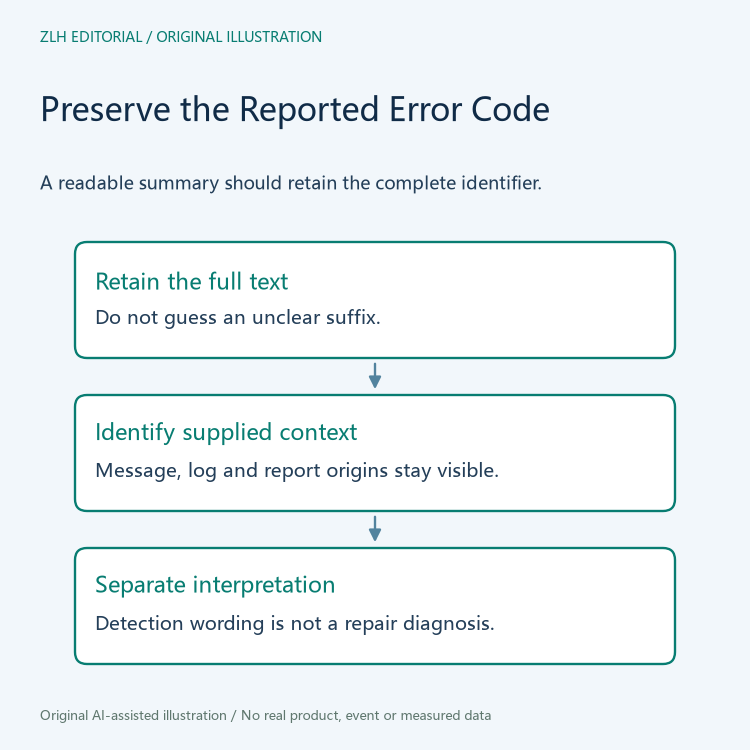
Keep the complete reported identifier alongside the summary
The official SW5_25_1 C153 page groups entries under a path-deviation heading while distinguishing particular codes. For example, C153A0 is described as detected by the base joint and C153A2 as detected by the elbow joint. Shortening both to C153 removes that specific distinction in the cited page.
A proposed intake form can retain two fields: the reporter's full code text and an optional plain-language summary. Do not replace the first with the second. If the code arrives as a cropped or unclear image, identify the transcription uncertainty and ask for a clearer account. The editor should not fill in an unreadable suffix from the reported symptom. That would make the record appear more precise while introducing information that the contributor never supplied.
Do not generalize one code family's suffix meanings
The inspected C153 page provides a particular mapping within that family. It is not a universal rule that every manufacturer code ending in the same characters identifies the same component. An intake glossary should attach its explanation to the complete code and applicable source page. If a different code family appears, read its own entry instead of transferring an interpretation from memory.
This matters even when the abbreviated summaries sound similar. A source directory may organize several conditions under related language, yet their detailed identifiers and descriptions remain separate. A useful record preserves the exact entry being discussed. A reader can then distinguish an explanatory grouping chosen for navigation from the original reported identifier used for technical follow-up. The grouping helps find information; it should not overwrite the evidence.
Distinguish an error identifier from a root-cause conclusion
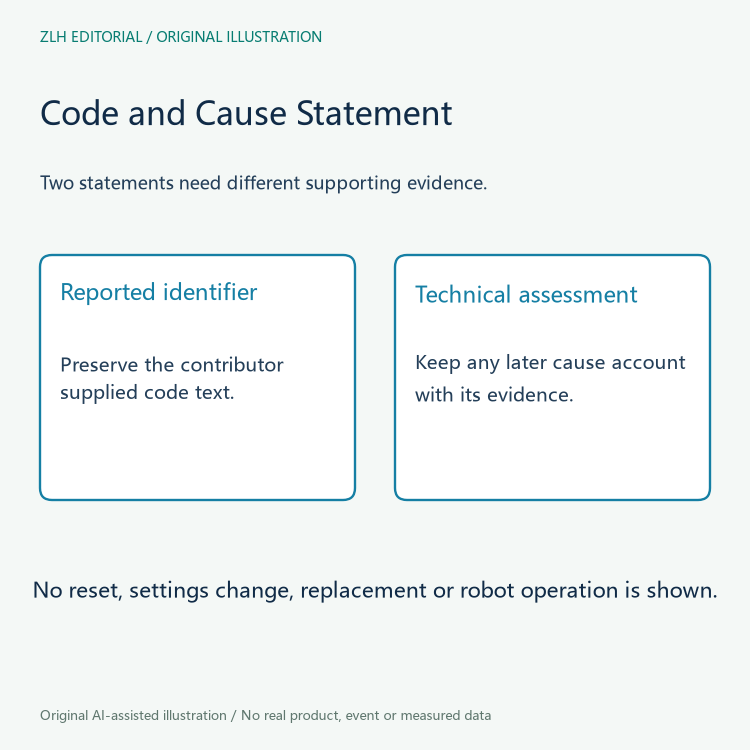
A reported code is part of the incident account. It does not by itself establish which physical part is defective or which action will resolve the issue. In particular, a phrase saying where an event was detected should not be rewritten as a confirmed replacement recommendation for that joint. The intake reviewer can preserve the source wording without turning it into a diagnosis.
Give the reporter's description of the circumstances its own space. If the contributor states that the message appeared during a particular application stage, label that as the contributor's account. If a technician later supplies an interpretation, identify it as a separate assessment with its own evidence. Keeping these roles distinct helps the repair desk avoid circulating an early guess as though it were the established cause.
Record where the reported code came from
The manufacturer's SW5_24 error-code introduction identifies several contexts in which error codes are used, including messages, logs and saved reports. This is useful provenance for an intake note. A transcription from a message and an entry copied from a saved report should be identified according to the supplied source, even if their visible identifier matches.
Retain the robot and software context as supplied by the contributor, and identify the manual revision used for the reading note. The two source pages in this article have different manual-path revisions; neither is presented as a verified match for a real machine. If the contributor cannot identify the relevant context, record that uncertainty rather than silently declaring that a convenient online page is the applicable instruction for the equipment.
Review a fictional shortened repair note
Imagine a fictional intake for Robot Alder. The initial note says only “C153, elbow issue,” while an attached transcription says C153A2. A reviewer can preserve the full transcription and clarify that the cited source describes a detection location. The reviewer cannot conclude from those words alone that the elbow assembly needs replacement. The correction improves the record's fidelity without claiming to resolve the incident.
If the reporter later supplies a different complete code, keep that correction and its source visible. Determine whether it replaces an earlier transcription or describes a separate reported event before merging the notes. A repair desk may need both accounts, but a single polished sentence should not hide the uncertainty about their relationship. Where the relationship is unresolved, write a clear follow-up question.
Use the site's reference category and related-information category for further reading. A precise intake conclusion can state that the full code, its submitted source and the contributor's circumstance description are now retained separately. The technical assessment remains its own task. No robot log, hardware test or operating action has been performed for this fictional example.


